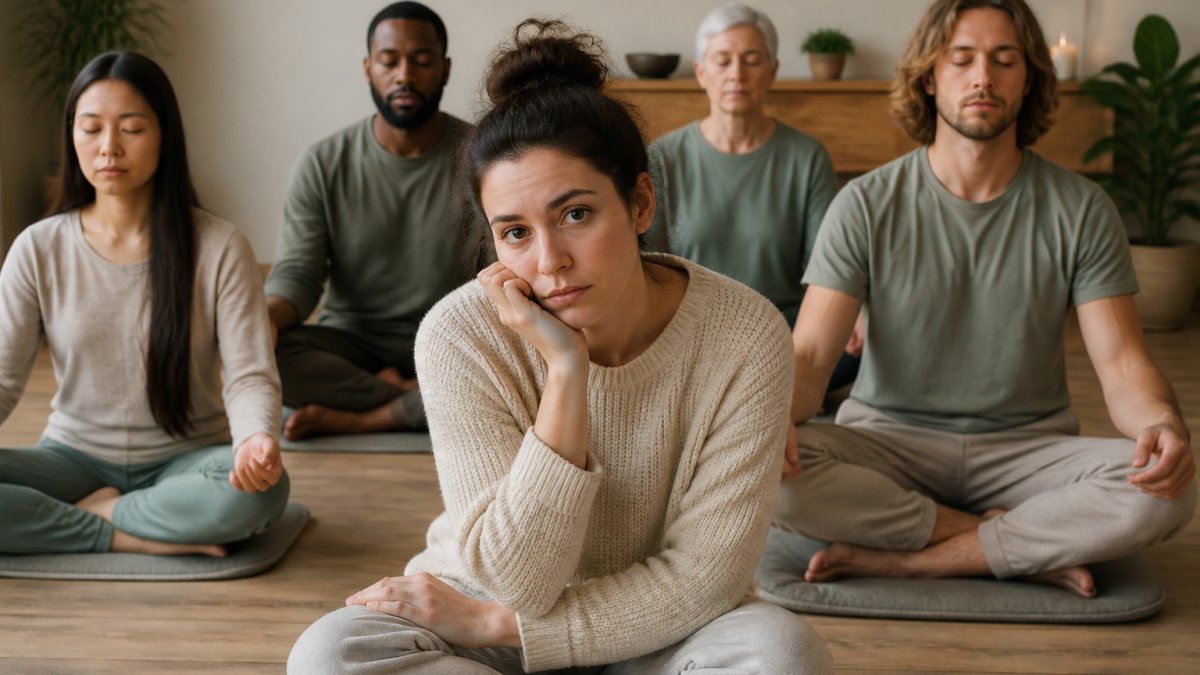
Why Traditional Meditation Increases Anxiety
Table of Contents
- Why Traditional Meditation Increases Anxiety
- Which Meditation Techniques Trigger Anxiety Most
- Signs of Nervous System Dysregulation During Meditation
- How to Regulate Your Nervous System for Beginners Without Forced Stillness
- Somatic Practices for Anxiety Relief That Don't Require Stillness
- What to Do If Meditation Makes Your Anxiety Worse
- Frequently Asked Questions
Last Updated: 2 October 2026
Why Traditional Meditation Increases Anxiety
Many people assume meditation should feel calming. The reality is more complex. For some individuals, especially those with nervous system dysregulation or unprocessed tension, why traditional meditation increases anxiety is a critical question that deserves a clear answer. (Source: interoceptive awareness)
When you sit in silence and turn attention inward, you're asking your nervous system to do something counterintuitive: stay still while processing whatever emerges. For someone whose body holds chronic tension or whose nervous system is already in a heightened state, this creates a paradox. The very practice meant to soothe can amplify distress.
Understanding why this happens is the first step toward finding practices that actually work for your system.
The interoceptive paradox: turning inward when your nervous system is already overloaded
The core issue lies in what happens when you direct attention inward. Interoception is your body's ability to sense its own internal state. In meditation, you're deliberately increasing interoceptive awareness.
This works fine for a calm, regulated nervous system. But when your system is already dysregulated, when your body holds suppressed tension, unprocessed trauma, or chronic activation, turning inward amplifies what's already there.
Think of it this way: if your nervous system is running at an elevated baseline, asking it to sit quietly and observe itself is like turning up the volume on a noise that's already too loud. You don't reduce the noise; you make it impossible to ignore.
Common patterns include:
- Increased heart rate during meditation
- Sudden panic or sense of dread
- Urge to move or escape
- Tingling, numbness, or physical sensations that feel threatening
- Intrusive thoughts that seem worse in silence
The problem isn't meditation itself. The problem is mismatch. Your nervous system isn't ready for that particular input.
Meditation as unguided exposure to suppressed tension
Meditation is essentially an exposure practice. You sit with whatever arises, thoughts, sensations, emotions, without trying to change them. This is powerful for some people.
But exposure without proper nervous system regulation can backfire. If your body has learned to suppress tension as a survival strategy, sitting still forces that suppressed material to the surface without giving your system the tools to process it safely.
Many individuals find that meditation triggers their worst symptoms. The body interprets the stillness and inward focus as an unsafe situation, and the nervous system responds defensively.
This is especially true when meditation happens without external support or guidance from someone trained to recognise and manage dysregulation.
Which Meditation Techniques Trigger Anxiety Most
Not all meditation styles create the same risk. Some are far more likely to trigger anxiety in dysregulated systems than others.
Breath-focused meditation and hyperventilation sensitivity
Breath-focused practices like pranayama or box breathing are often recommended for anxiety. Yet they can paradoxically worsen it.
When you deliberately control your breath, you're overriding your autonomic nervous system's natural regulation. For people with hyperventilation sensitivity or a history of panic attacks, this creates a direct pathway to anxiety.
Even subtle changes in breathing pattern can trigger:
- Tingling in fingers and face
- Light-headedness
- Sense of unreality
- Panic response
The irony is that breath control is taught as an anxiety tool. But for someone whose nervous system is already hypervigilant to breathing changes, it becomes a trigger.
Body scans and somatic flashback
Body scans ask you to move attention systematically through your body, noticing sensation without judgment. This sounds gentle. It can be anything but.
For individuals with trauma history or chronic pain, scanning the body can activate somatic flashback. Your nervous system doesn't distinguish between "I'm noticing my shoulder" and "something bad is happening to my shoulder." The attention itself becomes a threat signal.
Common responses include:
- Sudden pain or tingling in scanned areas
- Emotional flooding
- Dissociation
- Urge to stop the practice abruptly
Silence and the amplification of intrusive thoughts
Open awareness or "silent sitting" meditation removes external anchors. You're alone with your mind.
For people prone to intrusive thoughts or rumination, silence amplifies the problem. Without external focus, intrusive thoughts become louder, more persistent, and more distressing. The practice creates the opposite of calm.
Signs of Nervous System Dysregulation During Meditation
Your body gives clear signals when meditation isn't serving it. Learning to recognise these signs is essential.
Physical signals:
- Heart rate increases or becomes irregular
- Breathing becomes shallow or rapid
- Muscles tense, especially jaw, shoulders, or chest
- Trembling, tingling, or numbness
- Sudden pain or heightened pain awareness
Emotional signals:
Get The First Reset (free audio) →
- Panic, dread, or sudden fear
- Emotional flooding or uncontrollable tears
- Anger or irritability that wasn't present before
- Sense of unreality or disconnection
Cognitive signals:
- Racing thoughts that won't settle
- Intrusive thoughts become worse
- Difficulty focussing or concentrating
- Sense that something is wrong or dangerous
Behavioural signals:
- Urge to move, escape, or stop the practice
- Difficulty staying still
- Fidgeting or restlessness
- Avoidance of meditation altogether
If you notice these during practice, your nervous system is telling you something clear: this approach isn't working for your system right now.
How to Regulate Your Nervous System for Beginners Without Forced Stillness
The good news is that nervous system regulation doesn't require sitting still. In fact, for many dysregulated systems, movement is far more effective.

Movement-based regulation instead of sitting meditation
Your nervous system regulates through movement. This is fundamental biology. When you move gently and intentionally, your body processes tension and returns to baseline.
Start with:
- 10-15 minute gentle walks, ideally outdoors
- Slow, deliberate stretching without pushing into discomfort
- Gentle swaying or rocking while standing
- Progressive muscle relaxation with movement
Guided external focus rather than internal introspection
The most effective nervous system regulation for anxious individuals involves external focus, not internal.
Rather than turning attention inward, anchor it outward:
- Notice details in your environment: textures, colours, sounds, smells
- Follow a guide's voice rather than sitting in silence
- Focus on a specific task: gardening, cooking, crafting
- Engage your senses deliberately
Somatic Practices for Anxiety Relief That Don't Require Stillness
Somatic practices work with your body's natural intelligence rather than against it. They're particularly effective for people whose traditional meditation has failed.
Gentle movement sequences that release held tension
Your body holds tension in patterns. Releasing these patterns requires specific movement, not stillness.
Practices that work:
- Gentle neck and shoulder rolls
- Pelvic tilts and hip circles
- Spinal twists performed slowly
- Supported forward folds
- Gentle shaking or tremoring (allowing the body to move naturally)
Breath regulation through paced exhalation
Rather than controlling breath, you can regulate it by extending the exhale.
A simple pattern:
- Inhale for a count of 4
- Exhale for a count of 6 or 8
Proprioceptive grounding and embodied awareness
Proprioception is your sense of where your body is in space. Activating proprioception grounds your nervous system quickly.
Simple practices:
- Press your feet firmly into the ground and notice the sensation
- Push your palms together and feel the pressure
- Hold a weighted object and notice its weight
- Squeeze a pillow or cushion
- Tense and release muscle groups deliberately
What to Do If Meditation Makes Your Anxiety Worse
If you've tried meditation and it triggered anxiety, you're not broken. Your nervous system is simply telling you that particular approach doesn't fit your current state.
Stop forcing the practice and listen to your nervous system
The first step is permission to stop. If meditation increases your anxiety, continuing it won't help. It will only reinforce the pattern.
Instead of pushing through, ask:
- What does my body actually need right now?
- What practices leave me feeling calmer, not more anxious?
- What approaches allow me to feel safe?
Work with a clinician-guided approach instead of self-directed practice
Self-directed meditation assumes your nervous system can regulate itself. For dysregulated systems, this assumption is false.
Working with a clinician or trained guide changes everything. A guide can:
- Recognise when your nervous system is dysregulating
- Adjust the practice in real time
- Provide external structure and safety
- Offer alternatives when a technique isn't working
- Build skills gradually rather than overwhelming your system
Frequently Asked Questions
Why does traditional meditation make my anxiety worse?
Traditional meditation asks you to sit still and direct attention inward, exactly what an already-overloaded nervous system struggles with. When your system is dysregulated, turning inward can amplify physical sensations, intrusive thoughts, and suppressed tension you've been managing unconsciously. This is not a personal failure; it's a sign that your nervous system needs a different approach to regulation, one that works with your system's current state rather than against it.
What are signs of nervous system dysregulation I should watch for during meditation?
Common signs include racing heart, shallow or rapid breathing, tingling sensations, muscle tension, intrusive thoughts you can't dismiss, feeling trapped or panicked, dissociation, or a sense of dread. You might also notice old injuries or chronic pain areas suddenly intensifying. These aren't meditation 'working', they're signals that your nervous system is overwhelmed. Recognising these signs early helps you switch to gentler somatic practices for anxiety relief that support regulation instead of triggering it.
How can I calm my nervous system without traditional meditation?
Somatic practices for anxiety relief focus on movement, guided external focus, and paced breathing rather than stillness. Gentle movement sequences, proprioceptive grounding (noticing where your body contacts the ground), and breath regulation through extended exhalation activate your parasympathetic nervous system without forcing introspection. Clinician-guided approaches work particularly well because they meet your system where it is, rather than asking you to override your body's protective responses.
Is it normal to feel physical tension during meditation?
Yes, but it depends on context. Some tension release during practice is normal. However, if meditation consistently triggers increased tension, anxiety, or distress, that's your nervous system signalling it needs a different strategy. This is especially common for people with chronic fatigue, trauma history, or nervous system overload. Rather than pushing through, consider whether a somatic or movement-based approach might work better for your particular system's needs.
