
How to Tell If Vagus Nerve Stimulation Helps Anxiety
Last Updated: October 30, 2026
Quick Summary
Vagus nerve stimulation shows promise for anxiety, but the evidence is still building and depends on the type you use. Clinical VNS is established for some forms of epilepsy and treatment-resistant depression, not anxiety as a standalone diagnosis, while non-invasive taVNS research for anxiety remains preliminary.
- Non-invasive taVNS delivers mild electrical pulses through the skin of the ear with no surgery involved.
- Common taVNS side effects include tingling, prickling, skin redness and mild discomfort, which are short-lived.
- Try slow breathing in for a count of four and out for six to eight, five minutes twice a day.
- Speak to a professional first if you have a pacemaker, heart condition or skin damage near the ear.
- Consumer devices are not a regulated treatment for anxiety and should not replace proper care.
Table of Contents
- What Vagus Nerve Stimulation Is and How It Works
- Vagus Nerve Stimulation Benefits for Anxiety
- Transcutaneous Auricular Vagus Nerve Stimulation: What It Is and Who It Suits
- Vagus Nerve Stimulation Side Effects and Safety
- Vagus Nerve Exercises for Anxiety You Can Try at Home
- What the Research Says About VNS for Anxiety
- Start With a Gentle Nervous System Reset
- Frequently Asked Questions
What Vagus Nerve Stimulation Is and How It Works
Vagus nerve stimulation is a technique that sends gentle electrical pulses to the vagus nerve, a major pathway between the brain and body. It is often described as a way to nudge the nervous system towards calm. The question "is vagus nerve stimulation good for anxiety" has a short answer and a long one.
The vagus nerve is the tenth cranial nerve. It runs from the brainstem down through the neck, chest and abdomen. It carries signals in both directions, which is why it matters for mood, digestion and heart rate.
The vagus nerve's role in the nervous system
The vagus nerve is the main cable of the parasympathetic nervous system. That branch handles rest, digest and recovery. When vagal activity is strong, your body shifts away from the stress response. Breathing slows. The heart settles. Muscles let go.
When vagal tone is low, the opposite happens. You stay braced. Anxiety symptoms can feel louder. Rumination gets stickier.
How electrical stimulation affects anxiety
Electrical stimulation gives the vagus nerve a mild, controlled input, with the aim of raising parasympathetic activity. Researchers are still mapping exactly how this eases anxiety, but the pathway through the autonomic nervous system is the leading explanation.
There is a real difference between clinical VNS and the wellness exercises most people mean. Clinical VNS uses medical devices, some implanted, some non-invasive. Wellness exercises use breathing and gentle self-stimulation. Keep that line clear in your mind. It changes what you should expect.
Vagus Nerve Stimulation Benefits for Anxiety
The honest answer to "is vagus nerve stimulation good for anxiety" is that it depends entirely on which kind of stimulation you mean. The benefits people report fall into two very different buckets, and mixing them up is the most common source of disappointment.
What clinical and studied stimulation may offer
For implanted VNS, the established evidence base is for specific forms of epilepsy and treatment-resistant depression, not anxiety as a standalone diagnosis. Anxiety is a separate question, and the research there is smaller and earlier. Non-invasive taVNS is being studied for anxiety, post-traumatic stress and broader emotional regulation, and early findings suggest possible benefit. Study sizes are often small, populations vary, and outcomes are measured differently between trials, so the evidence for anxiety specifically remains preliminary.
What wellness exercises and consumer devices may offer
Breathing exercises, humming and gentle self-stimulation are not treatments for an anxiety disorder. What they can do is give you a reliable way to settle the body in the moment. The realistic gain for many people is a shorter, shallower stress response rather than the disappearance of anxious thoughts. That is still worth having, it just is not the same claim as a clinical treatment.
Reported benefits from gentle practice include:
- Calmer, slower breathing within a few minutes
- Less jaw, throat and shoulder bracing
- A quieter physical edge to anxiety, even when thoughts continue
- Better sleep onset when practised before bed
- A steadier stress response across the day with regular repetition
Setting realistic expectations
Response varies widely. Some people notice a shift within minutes of slow breathing. Others need weeks of daily practice before anything changes. A few notice very little, and that is not a personal failing, it usually means the entry point was too fast or the technique did not suit them.
A useful distinction: temporary calming is not the same as treating an anxiety disorder. If anxiety is affecting work, sleep or relationships, stimulation of any kind should sit alongside proper care, talking therapy, medication where appropriate, and advice from your GP, not replace it.
Transcutaneous Auricular Vagus Nerve Stimulation: What It Is and Who It Suits
Transcutaneous auricular vagus nerve stimulation, usually shortened to taVNS, is a non-invasive form of VNS. It delivers mild electrical pulses to the auricular branch of the vagus nerve through the skin of the ear. No surgery is involved.
This is the form most at-home consumer devices use.
Who it may not suit:
- People with certain heart conditions
- Anyone with an implanted medical device such as a pacemaker
- People with skin damage or infection near the ear
- Anyone unsure of their diagnosis
If you fall into any of those groups, speak to a qualified professional first. Do not self-prescribe. The NHS overview of vagus nerve stimulation is a sensible starting point for the clinical picture.
Vagus Nerve Stimulation Side Effects and Safety
Safety depends heavily on the type of stimulation. Treat implanted, non-invasive device and exercise-based approaches as three separate risk profiles rather than one.
Side effects by type
With non-invasive taVNS and consumer ear devices, the most common effects are mild and short-lived: tingling, a slight prickling sensation, skin redness and mild discomfort where the device sits. Some people report a temporary tickle in the throat.
With implanted VNS, side effects can include hoarse voice, throat tickle, cough and shortness of breath during stimulation, alongside the ordinary risks of surgery.
Exercise-based techniques such as slow breathing and humming are generally gentle, though they may not suit everyone.
Who should avoid or check first
- You have a pacemaker, implanted defibrillator or other implanted medical device
- You have certain heart conditions or arrhythmias
- You have skin damage, infection or a wound near the ear or neck
- You are pregnant or unsure of your diagnosis
- You take medication that affects heart rate or blood pressure
This is not an exhaustive list. Consumer devices are not a regulated treatment for anxiety, and their instructions may not account for your individual history. Do not self-prescribe electrical stimulation.
Stop conditions
Stop and seek advice if you notice:
- Pain that does not settle when you lower the intensity or stop
- Dizziness, faintness or a racing heart
- Skin irritation that persists or worsens
- A new cough, hoarseness or breathing change with device use
- Any sudden worsening of anxiety or mood
These are not signs to push through. They are signals to pause and check with your GP or specialist.
Honest limits
- Consumer devices are not a regulated treatment for anxiety
- Evidence for at-home devices is thinner than for clinical VNS
- Results are not guaranteed for anyone
- Devices should not replace care for a diagnosed mental health condition
If you take medication or have a diagnosed condition, check with your GP or specialist before starting. This is general information, not individual medical advice.
The risks differ sharply by type, so treat each approach as its own risk profile.
| Type | Common side effects | Notes |
|---|---|---|
| Non-invasive taVNS and consumer ear devices | Tingling, prickling, skin redness, mild discomfort, throat tickle | Mild and short-lived |
| Implanted VNS | Hoarse voice, throat tickle, cough, shortness of breath | Also carries ordinary surgical risks; specialist care only |
| Exercise-based techniques | Generally gentle | May not suit everyone |
Vagus Nerve Exercises for Anxiety You Can Try at Home
You do not need a device to influence vagal activity. Slow breathing is a simple, free route that many people use. A longer out-breath than in-breath is a commonly described pattern.
Try this five-step routine:
- Sit comfortably and drop your shoulders.
- Breathe in through the nose for a slow count of four.
- Breathe out gently for a count of six to eight.
- Repeat for five minutes, twice a day.
- Notice jaw, throat and breath tension as you go.
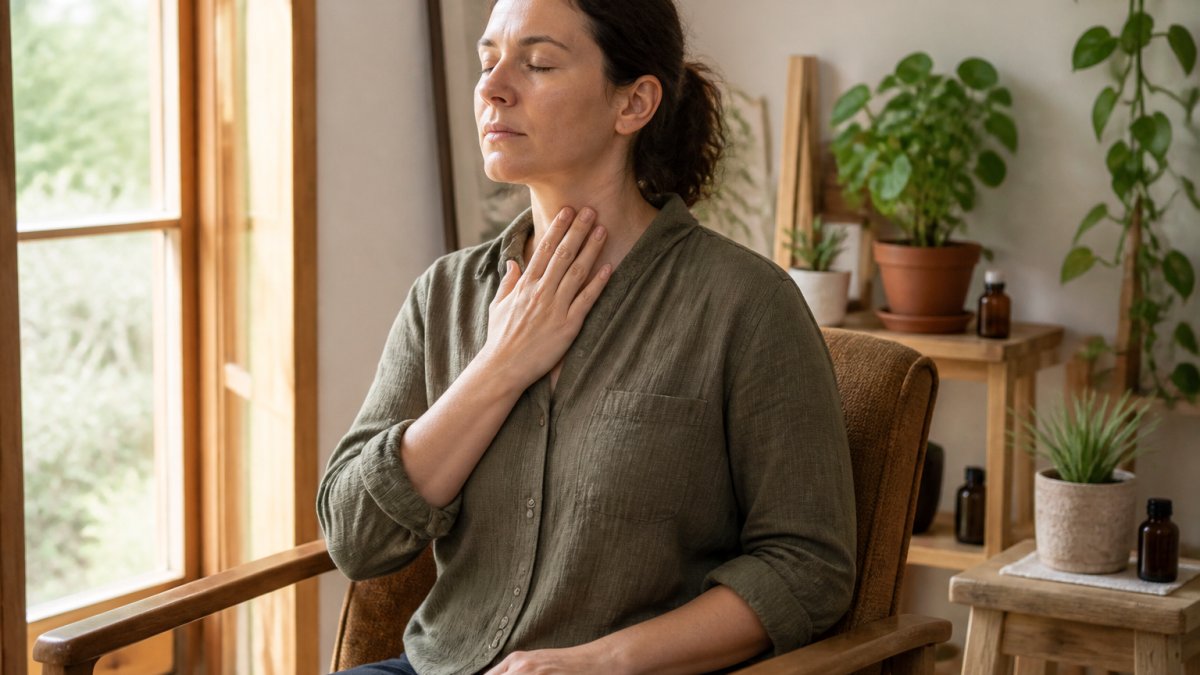
Other gentle practices people commonly try include humming and gentle gargling. Keep them gentle. If a practice makes your anxiety worse, stop and try a softer one.
A reaction like this can happen, and it does not mean the practice has failed. If you want a beginner-friendly grounding first, our guide on how to regulate your nervous system walks through the basics. For those who prefer body-led work, somatic support for nervous system regulation explains how that approach fits.
What the Research Says About VNS for Anxiety
The evidence is promising but not settled. Clinical VNS is used for some conditions, including certain forms of epilepsy and treatment-resistant depression. Anxiety is a different question, and the research base there is smaller.
What we can say with confidence:
- Non-invasive taVNS is being studied for anxiety, PTSD and emotional disorders
- Early findings suggest possible benefit for emotional regulation
- Study sizes are often small, and results vary between trials
- More strong clinical trials are needed before firm claims are made
The Cochrane Library on vagus nerve stimulation is a good place to read reviews of the evidence as it develops. For a wider view of evidence-based somatic work, our guide to evidence-based somatic stress relief sets out what the research supports in practice.
Our honest position: VNS is worth exploring, especially the non-invasive forms. It is not a cure, and it should sit alongside proper care, not replace it.
Start With a Gentle Nervous System Reset
The hardest part is often knowing where to begin. If your body feels locked up and your test results come back normal, a gentle starting point beats a forceful one. That is the principle behind everything we do.
At The Natural Flow Method, we build clinician-guided audio around removing blockages rather than forcing change. If you are unsure what your body is carrying, our two-minute body quiz helps you find the one thing to change first. If you want to understand the approach itself, read about The Natural Flow Method.
Frequently Asked Questions
Can vagus nerve stimulation help with anxiety?
Research is still emerging, and evidence for anxiety specifically is not yet conclusive. Non-invasive approaches such as transcutaneous auricular vagus nerve stimulation are being studied for anxiety symptoms, while implanted devices are used for other conditions. It is not a guaranteed treatment, and anyone considering it should speak to a qualified professional first.
How does vagus nerve stimulation differ from vagus nerve exercises?
Vagus nerve stimulation uses electrical impulses, either through an implanted device or a non-invasive device placed on the ear or neck. Vagus nerve exercises for anxiety are physical techniques such as slow breathing, humming or gentle neck movement that aim to support vagal activity without electricity. Exercises are free, low-risk and can be done anywhere, while stimulation devices are clinical tools with specific settings and safety considerations.
Is vagus nerve stimulation safe to try for anxiety?
Non-invasive transcutaneous auricular vagus nerve stimulation is generally described as having mild side effects, such as skin irritation or tingling. Implanted devices carry surgical risks and are only used under specialist care. It is not suitable for everyone, so check with your GP or a qualified clinician before trying any device, especially if you have a pacemaker, are pregnant or have a history of heart problems.
Can you overstimulate the vagus nerve?
Yes, overstimulation is possible, particularly with electrical devices used at high settings or for long periods. Signs can include dizziness, throat discomfort, coughing or a hoarse voice. Following the manufacturer's instructions is advisable with any device. If you experience persistent side effects, stop and seek advice from a healthcare professional.
If you have tried relaxation before and found it made things worse, you are not alone. Gentle, embodied work is different from forcing yourself to relax. The Natural Flow Method offers clinician-guided audio, a focus on removing blockages rather than pushing through, and a pace built for people whose systems are already overloaded. Get started with The Natural Flow Method and take the first gentle step toward releasing tension that rest alone has not reached.

