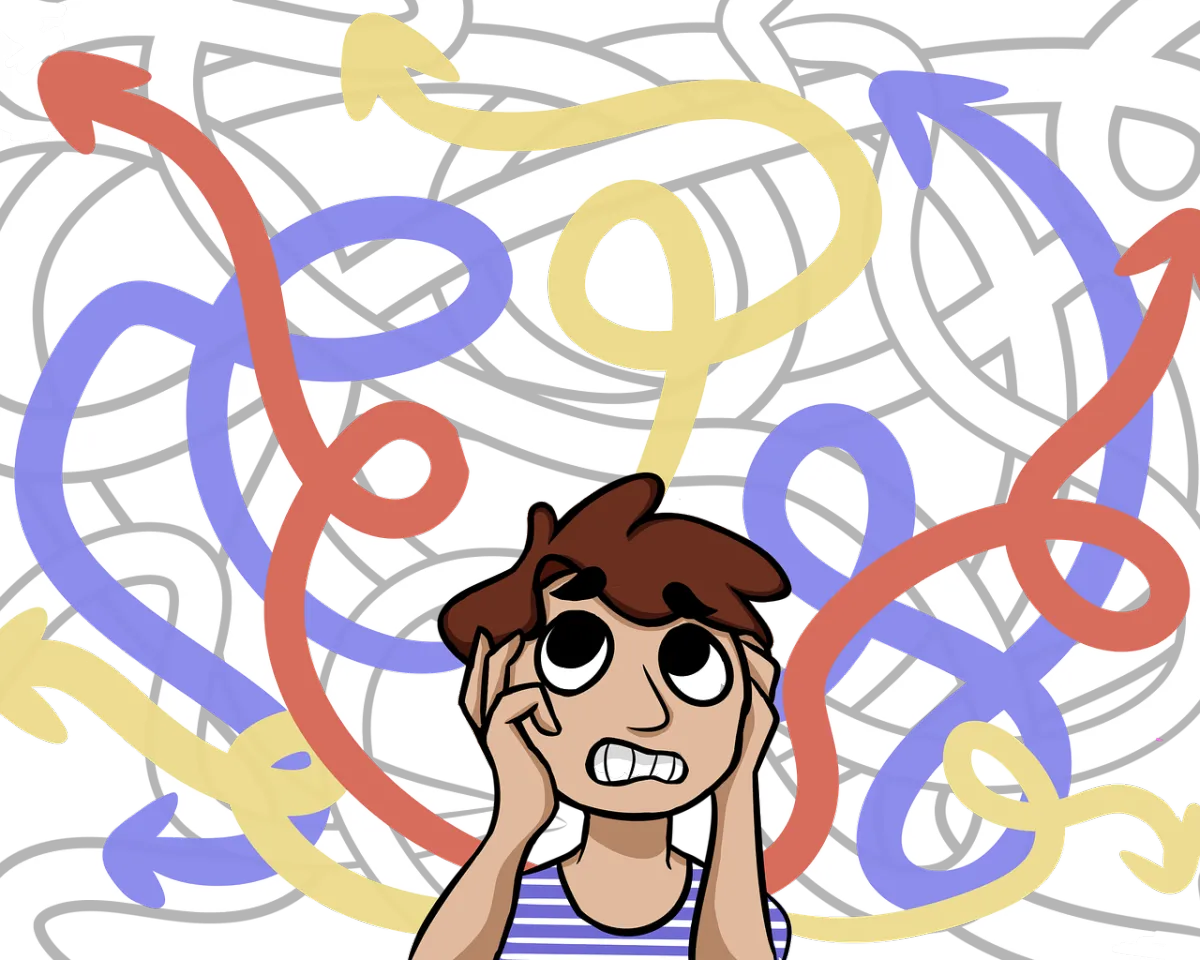
Is It Discipline, or Is It Your Environment? How to Tell
If you have ever told yourself you just need to try harder, this is for you. The idea that health and habit change come down to willpower is one of the most persistent pieces of advice in the self-improvement world, and one of the least useful. Here is a better way to understand why you struggle, and what works instead.
Why the willpower model fails
Willpower is treated like a muscle you are supposed to train. The assumption underneath is that if you are not succeeding, you are not trying hard enough, and the answer is more discipline.
The physiology says otherwise. Willpower is a finite resource, and it is the first thing to drop when your nervous system is already under load. Think of it as spending: you only have so much to give, and when your environment is demanding more than your system can supply, there is nothing left for the habit, the workout, or the early morning.
Your body is not a machine that wears out in predictable, replaceable parts. It is an organism that is responding to the environment it lives in. When that environment asks too much, the response is not laziness. It is protection.
The symptoms that are actually signals
The body communicates in specific ways. None of them are character flaws, even though we are taught to read them as such:
Pain that moves around and never settles anywhere.
Fatigue that does not improve with rest.
Brain fog that clears when you leave a particular place or situation.
A dig that handles food differently on a calm day than a stressful one.
Each of these is a report. Your body is telling you what the load is costing. Responding to the report by blaming yourself is like punishing the smoke alarm for going off instead of checking for fire.
What the nervous system is actually doing
The nervous system has one priority: survival. It is scanning for threat, whether that threat is in the room or only remembered. When it detects more load than it can absorb, it acts to protect you.
It clenches the jaw, clamps the neck around the airway and vital structures, and holds the shoulders up. None of this is voluntary. The person who cannot relax on command is not failing at a technique. Their system has decided the environment is not safe to let down in.
That is why relaxation tapes so often backfire. The instruction to relax lands on a body that cannot relax, and the gap becomes its own failure. The person tries, fails, and ends up more stressed than when they started.
The fix is not more effort
If the problem is load and the nervous system's response to it, then the solution is to reduce the load, not to shame the person carrying it.
Willpower burns out precisely when the environment is asking too much. Change the environment, and the organism can stop defending itself. That is the most direct intervention available.
A one-step starting point
Do an honest audit of what your body has been spending its capacity on this month. Not what you should be doing. What has actually been costing you. The inbox you avoid. The person whose messages make your chest tighten. The room you cannot rest in. The sleep you keep trading away.
Write it down without judging it. Then remove one thing from that list, the one that would hurt least to let go.
That single subtraction will do more than another year of trying harder, because it removes the load instead of asking you to push through it.
You were never the problem. You were carrying something that was never yours to hold alone.
